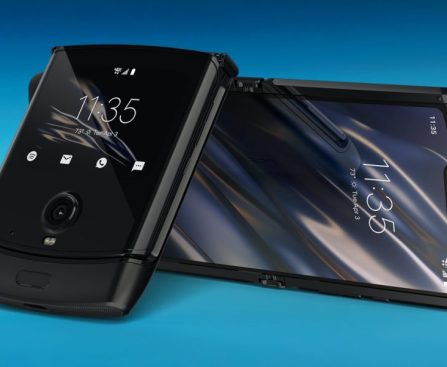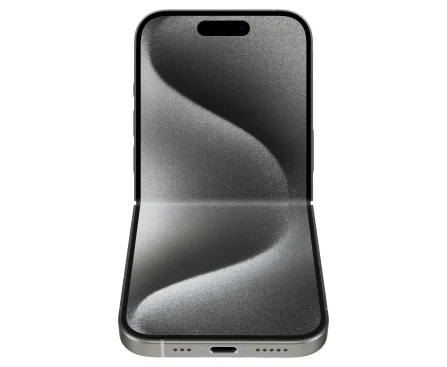
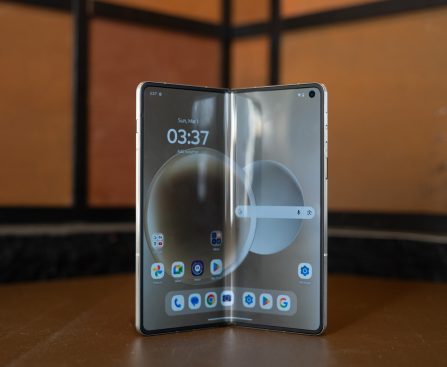
Motorola has revealed a little more about its upcoming folding phone, and all signs point toward a premium option – not the budget-friendlier alternative the category could use. For starters, the Razr Fold will cost €1,999 (about $2,350) bundled with the Moto Pen Ultra. It’ll go on sale first in Europe, with North America to […]
Blog Posts
Blog Posts
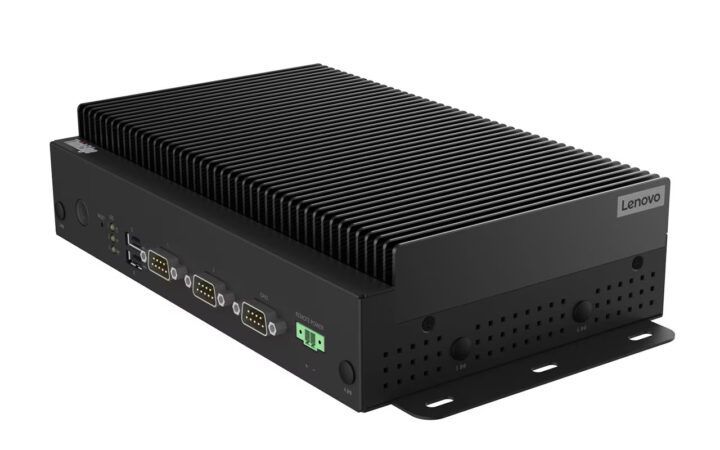
Lenovo ThinkEdge SE60n Gen 2 Fanless AI Computer: Up to 97 TOPS Intel Core Ultra 7 265H SoC

Lenovo has recently unveiled new ThinkEdge devices for edge AI applications: the Intel “Arrow Lake”-powered ThinkEdge SE60n Gen 2 fanless computer for up to 97 TOPS of AI performance, the ThinkEdge SE10n Gen 2 edge gateway, the compact ThinkEdge SE30n Gen 2 “Raptor Lake” edge client with up to Intel Core 7Â 150U, and the company’s first industrial all-in-one (AIO) Panel PC, the ThinkEdge SE50a. We’ll focus on the ThinkEdge SE60n Gen2 fanless embedded computer in this article. It’s powered by an up to Intel Core Ultra 7 265H SoC paired with DDR5 memory, M.2 NVMe and/or SATA storage, and offering two HDMI and one DisplayPort video outputs, audio out and microphone jacks, dual 2.5GbE, WiFI 6E, six USB 3.0/2.0 ports, two RS232/RS485 COM ports, an 8-bit DIO DB9 connector, three M.2 sockets for expansion, as well as a 80-pin Intelligent Expansion Technology (ITE) connector for optional expansion modules. Lenovo […]
The post Lenovo ThinkEdge SE60n Gen 2 fanless edge AI computer features up to 97 TOPS Intel Core Ultra 7 265H SoC appeared first on CNX Software – Embedded Systems News.
Practical Comparison: Motorola Razr Fold vs. Samsung Galaxy Z Fold 7 – Reasons Why Motorola Excels
Motorola has formally announced the complete specifications for its newest foldable device, the Motorola Razr Fold, at MWC 2026. This latest phone aims to rival Samsung’s leading foldables, such as the Galaxy Z Fold 7, showcasing a variety of remarkable features and enhancements.
The Motorola Razr Fold features the Snapdragon 8 Gen 5 processor, providing up to 16GB of RAM and a considerable battery capacity, marking a significant advancement for Motorola’s foldable range. The device also guarantees seven years of Android OS upgrades and security enhancements, putting it on par with the longevity provided by rivals such as Samsung and Google.
A key highlight of the Razr Fold is its 6,000mAh silicon-carbon battery, which Motorola asserts is the largest in any foldable device on the U.S. market. This is paired with rapid charging options, offering 80W wired and 50W wireless charging speeds. The display technology of the Razr Fold is impressive as well, featuring an 8.1-inch, 2K OLED main display along with a 6.6-inch external screen that boasts a 165Hz variable refresh rate.
Regarding design, the Razr Fold incorporates Gorilla Glass Ceramic 3 cover glass for greater durability. The aesthetic of the phone sits between the Google Pixel 10 Pro Fold and the Samsung Galaxy Z Fold 7, striking a balance of curves and edges. Although it is slightly heavier and thicker than its Samsung rival, the design and weight distribution of the Razr Fold makes it easy to hold.
Motorola’s dedication to software updates and the inclusion of a sizable battery with fast charging capabilities could make the Razr Fold an attractive option for consumers in search of a trustworthy and enduring foldable phone. While it may not outshine the Galaxy Z Fold 7 in every regard, the Razr Fold’s distinctive features and competitive pricing might establish it as a formidable player in the foldable market.
Motorola Unveils Razr Fold Specs: Possibly the Top Camera and Battery Foldable of 2026
With a set of three 50MP cameras and an impressive 6,000mAh silicon battery, the Razr Fold is hitting all the right chords.
When Motorola first presented the Razr Fold, it didn’t reveal many details. This is changing at Mobile World Congress 2026, with Motorola now offering all the specifications for the forthcoming foldable, and honestly, I’m eager to get my hands on the device.
The Razr Fold features an 8.1-inch inner display with 2K resolution, along with a 6.6-inch outer display. Both support HDR10+ and Dolby Vision, and what’s intriguing is that the outer display can reach up to 165Hz in specific situations — while the inner display has the standard 120Hz refresh rate.
It’s evident that Motorola is prioritizing cameras as a key differentiator, with the foldable advertising what may be the finest cameras in this sector in North America. The Razr Fold includes an f/1.6 50MP Sony Lytia 828 primary camera with a 1/1.28-inch sensor and 2.44um pixels, accompanied by an f/2.4 50MP Sony Lytia 600 telephoto lens with 3x optical zoom, and a 50MP wide-angle module boasting a 122-degree field of view.
A 32MP camera is present on the outer display, and a 20MP module is situated on the inside. The inclusion of Sony’s Lytia modules on the rear cameras is expected to provide the Razr Fold with a definite advantage, and for what it’s worth, Motorola is promoting the foldable’s DXOMark Gold Label award, calling the Razr Fold the best foldable camera in North America and the second-best camera of any smartphone sold in the area.
Another notable feature is the battery technology; the Razr Fold is equipped with a substantial 6,000mAh silicon-carbon battery, and it supports 80W charging technology along with 50W wireless charging. It’s exciting to witness Motorola utilizing silicon-carbon technology in this segment, and the large battery size offers the device a significant benefit over the Galaxy Z Fold 7.
The foldable operates on Qualcomm’s Snapdragon 8 Gen 5 platform, and while it may not be the most powerful chipset Qualcomm provides, it is expected to perform well. Motorola is offering the Razr Fold with 16GB of RAM and 512GB of storage, and the device boasts IP4 and IP49 dust and water resistance.
Measuring at 4.6mm, the Razr Fold is slightly thicker than the Z Fold 7, but that’s not noticeable when holding the foldable. Although the weight is a bit heavier at 243g, this is due to the larger battery, and it doesn’t bother me at all.
Motorola is also promising seven years of Android OS updates and seven years of security updates for the Razr Fold, placing it on par with the Pixel 10 Pro Fold and the Z Fold 7.
AC’s Take
I am genuinely impressed with Motorola’s approach to its book-style foldable. There is an evident lack of quality foldables in North America, and Motorola’s choice to incorporate a 6,000mAh battery and emphasize the cameras gives the Razr Fold a considerable edge in this category.
All that’s left is to determine the foldable’s price — Motorola hasn’t disclosed that information — and when it will be released. However, having tested it at Motorola’s briefing, I’m looking forward to the Razr Fold launching later this year.
Uncover the Purpose of the Unutilized Button on Your Vehicle’s Rear View Mirror
The USB port of your vehicle can accomplish more than you realize; these buttons may also fulfill various functions depending on your car’s make, model, and year.
You might notice an auto-dimming button instead of a manual control on your rear-view mirror. Usually, you will press it to switch it off or on, accompanied by a light indicator to inform you when it is active. When engaged, it automatically modifies your rear-view mirror based on headlight glare from behind the vehicle. This facilitates better visibility and allows you to maintain a grip on the wheel for safer driving.
Nonetheless, some vehicles have one or several additional buttons that activate various features. This can vary greatly depending on your specific vehicle, as they are not as standardized as dimming the rear-view mirror. Features can include connecting to a home system, calling for assistance in emergencies, and more.
Rear view mirror buttons on specific brands
Potentially Limited Apple Products in 2026
shipping holdups when a new iPhone launches, products typically stabilize in availability quite swiftly. This benefits Apple’s financials as it minimizes the risk of overproduction for any particular device, thereby avoiding a situation where devices languish unsold. By maintaining a limited inventory, Apple manages to keep prices from plummeting too significantly while also enhancing the perception of strong demand for its products.
This partially clarifies why certain items become exceedingly scarce following Apple’s discontinuation of a product or the launch of a new model of an existing product. Given that the current stock is already low, it often sells out rapidly once a newer model is introduced.
At times, it is straightforward to predict when an item will become difficult to find. In some situations, Apple gradually reduces production in the months preceding a discontinuation. In other instances, forecasting which items will be scarce is easy due to established upgrade patterns. For instance, it was hardly unexpected that the iPhone 16 became scarce when the iPhone 17 was unveiled. With this in mind and considering the speculated upcoming product launches, here are several items that might be challenging to locate in 2026.
iPhone 16e
The Function of Cameras on Traffic Signals Goes Further Than Just Snaring Red-Light Offenders
add a fourth signal light for robotaxis. Vehicle sensors may also prove advantageous for examining car collisions and various criminal acts if utilized as a monitoring system.
Certain cameras positioned atop traffic signals are, in fact, utilized for law enforcement concerning traffic. These cameras activate when a vehicle disregards a red light, recording the vehicle’s behavior and license plate details through video or photos. Nonetheless, they are not necessarily present at every intersection, as these devices tend to concentrate on high-traffic regions or locations near educational institutions and medical facilities.
The evolution of traffic light cameras
Five Sentimental ’80s Innovations That Stir Deep Feelings in Baby Boomers
Technology is evolving at such a rapid pace that it’s soothing to take a moment and nostalgically reflect on the gadgets of the past. It’s tough to find tech more quintessential than that from the ’80s.
The ’80s produced a multitude of devices and inventions that transformed the tech landscape, including the Nintendo Entertainment System and the Sony Walkman (which technically launched in late-1979, but its widespread appeal didn’t surge until 1980). Many younger individuals today may never have the chance to engage with these devices, yet the right piece of ’80s technology can evoke strong feelings in the older demographic, often referred to as “boomers” (not to be confused with the Boomers from “Gears of War” or “Left 4 Dead”). They might experience a flood of nostalgia as they remember their first cellphone experience or irritation recalling how their kids incessantly requested a gadget that turned out to be fleeting.
Here are some examples of technology that has either been phased out or is now outdated, likely stirring emotions in individuals aged 62 to 80.
The Clapper
Long before smart home devices could be operated via smartphones, engineers were experimenting with ways to control lights without manually switching them. The Clapper stands out as perhaps the most iconic example.
Launched in the mid-’80s, this sound-activated electrical switch was operated by — you guessed it — clapping your hands. A clap would allow electricity to flow to the connected device, while another clap would halt it; users could even modify the number of claps to switch between outlets or program the Clapper to respond to any sound.
The Clapper’s widespread appeal contributed to its success. It was accessible for seniors and those with mobility challenges to manage lights, but it also served anyone whose bed was positioned far from the switch. However, the true driving force behind the Clapper’s popularity was its budget-friendly TV ad that made the phrase “Clap on! Clap off!” memorable. This catchy campaign left a lasting impression and ensured the Clapper remained in the memories of nearly everyone who experienced the ’80s.
Pagers
Although the pager was invented in the early 1920s, its peak popularity occurred in the ’80s. Pagers are quite straightforward: They buzz to notify you that you have a message from a phone number or email, and they also show the sender on an LCD display. That’s about it. You can’t reply via a pager, but you can gracefully step away from social gatherings without creating a disturbance with unnecessary chatter or jarring ringtones.
While smartphones have largely replaced pagers because they allow for immediate responses to incoming messages, pagers still retain a niche in modern communication. Unlike smartphones, pagers don’t require a cellular or Wi-Fi connection and actually face less latency.
While some people continue to utilize pagers — particularly in emergency services — a larger number favor smartphones due to their user-friendliness. Additionally, when comparing the number of companies still producing pagers and offering paging services to those in the smartphone market, it’s clear that although pagers are not entirely obsolete, they are indeed becoming rare.
DynaTAC Cellular Phone
Nowadays, we often take cell phones for granted, in part because they’re woven into our everyday existence — you can even employ them to print label stickers and stream music. However, during the ’80s, cellphones were a novel innovation, and using one would capture people’s attention. Mainly because the DynaTAC Cellular Phone, the world’s first cellphone, resembled a hefty brick.
Since DynaTAC phones predated items like the Nintendo Game Boy, creators weren’t focused on adding entertainment features. The DynaTAC cellphone was a basic device, priced in the thousands, with a battery life limiting it to just 30 minutes of use. And you thought that smartphone apps like Netflix drained your battery. Regardless, the unparalleled freedom the DynaTAC offered led to its immense success, and its design was iteratively improved until it paved the way for the first flip phone: The MicroTAC 9800X.
Despite being terribly outdated by today’s standards, the DynaTAC endures in spirit through modern mobile phones and within any media set in the ’80s that illustrates characters using brick-like wireless devices.
The Power Glove
While numerous gadgets from the ’80s are linked to joyful experiences, others, like the Nintendo Power Glove, bring forth deep-seated groans of frustration. This gaming accessory was a controller worn like a glove, representing Nintendo’s initial venture into motion controls. However, akin to many trendy attachments from that era, the device hardly functioned well. Users
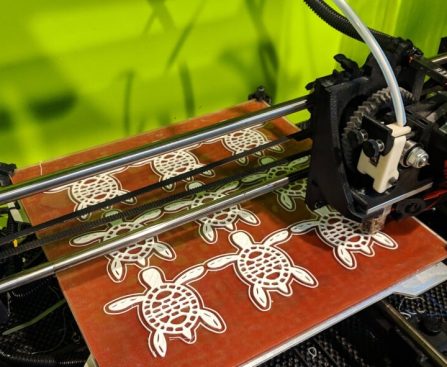
Five Creative 3D Printing Endeavors to Improve Your Laptop
portable laptop cooling stand offers an efficient solution even for the top gaming laptops. This construction is crafted to accommodate two 80-millimeter fans that direct airflow straight towards the bottom of the chassis, where most laptop models have air intake vents. Even in cases where there are no suitable vents, like those incorporated into the hinges of MacBook Pro and Air, users are still able to cool the most heated area of the laptop, which is crucial for enhancing laptop clock speeds for improved performance during demanding and sustained loads. The design is quite straightforward yet robust, requiring only three main components for the frame along with a couple of covers for the joints.
There are two distinct side stand alternatives to cater to most laptops: one with a solid finish for a sleeker appearance or a portable variant featuring grip holes for easier transport and cable management. Assembly is relatively easy — the fans can be fastened with their original screws, and the internal cables are placed into a specific slot before being secured with a lid. This will use approximately 456g of filament, and both fans are priced around $15. It measures 300 millimeters in width and 265 millimeters in depth, providing ample space for devices ranging from 15 inches to 17 inches, provided that you are fine with the support being centralized at the base of the laptop.
Webcam cover
With increasing worries about Wi-Fi security and surveillance on networks, it’s evident that digital privacy should be prioritized when using internet-connected devices. While hardware and software can be susceptible to breaches, a 3D-printed webcam cover cannot. This physical laptop webcam cover showcases a slim design and a sliding mechanism that fits perfectly when a laptop is opened or closed, ensuring that the rubber feet safeguarding the laptop screen from the keyboard are sufficiently tall.
This print is remarkably compact and quick, designed to be printed at a resolution of 0.16 with 25% infill. These specifications afford ample detail for the sliding mechanism to function seamlessly, making it a swift weekend 3D project. It boasts a more refined design.
The Role and Utility of the Panic Button on Your Car Key Fob
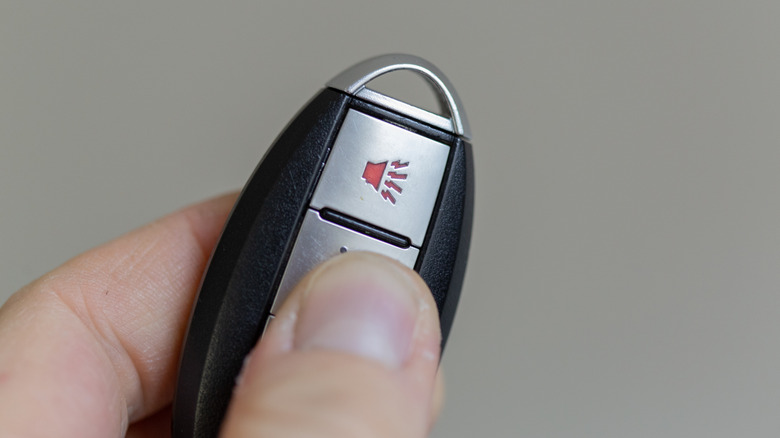
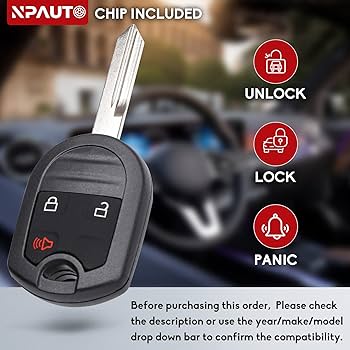
Regarding the panic button on your key fob, you likely belong to one of two groups. Either you’re aware of its presence but have never really utilized it, aside from the occasional unintentional press, or you have pressed it too many times to find your car in a packed parking area when you lost track of where you parked. Although this method is a clever trick to locate your vehicle by following the sound of the horn, it isn’t the button’s primary purpose. It’s termed a panic button for good reason — although we completely understand the sentiment that losing your car could warrant a slight panic.
The purpose of the panic button is to be employed during emergencies, crafted to draw attention so that bystanders might notice it, recognize its origin, and either provide assistance or call for help. Some car owners might dismiss it as a nuisance due to accidental activations. Many panic buttons feature a press-and-hold mechanism that reduces the chances of accidental use. However, if it resides in a bag or pocket and is pressed by something else, it could still be unintentionally activated, startling neighbors or those nearby. Nonetheless, this is a minor drawback compared to the safety benefits it offers.